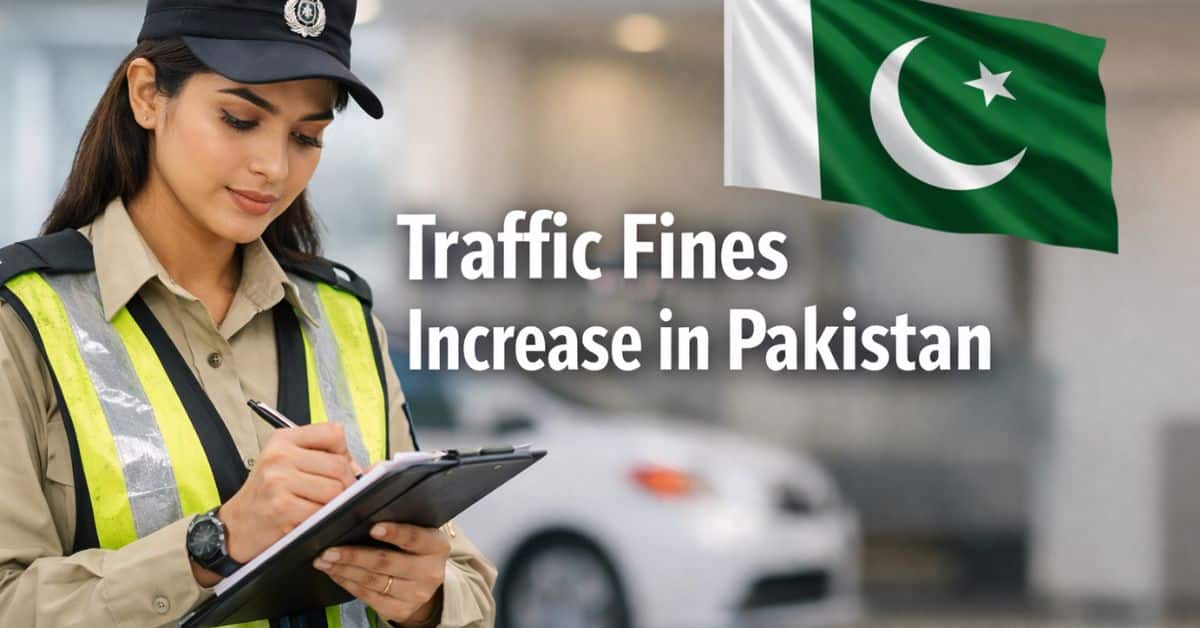
Why Traffic Fines Are Increasing in Pakistan in 2026 have risen significantly in 2026, surprising many drivers, motorcyclists, and commercial vehicle operators. From increased penalties for speeding and helmet infractions to enhanced enforcement via AI-powered cameras, the traffic enforcement landscape has undergone a substantial transformation.
This escalation is not arbitrary. It is the outcome of policy reforms, increasing road incidents, digital enforcement mechanisms, and revenue-oriented governance frameworks implemented by federal and provincial authorities.
Traffic Fines in Pakistan 2026 – What Has Changed?
In 2026, Pakistan has commenced a new chapter of automated traffic enforcement. Unlike in previous years, when fines were frequently imposed inconsistently, authorities are now upholding traffic regulations through:
- AI-enabled Surveillance Cameras for Safe City Initiatives
- Automated Number Plate Recognition (ANPR) systems
- E-challan databases integrated with NADRA and vehicle registration records
- Centralized fine collection via PSID and digital wallets
Consequently, violations are being identified more frequently, and penalties are more severe than previously.
Key Reasons Why Traffic Fines Are Increasing in Pakistan:
1. Rising Road Accidents and Fatalities
One of the primary factors contributing to the escalation of traffic penalties in Pakistan is the concerning increase in road accidents.
According to official traffic authorities, Pakistan reports:
- Thousands of catastrophic incidents occur annually
- A significant proportion involving motorcycles
- Recurring infractions such as acceleration, lane violations, and signal disregard
The government contends that increased penalties serve as an effective deterrent, compelling drivers to adhere more strictly to traffic regulations.
2. Expansion of Safe City & AI Traffic Camera Systems
In 2026, Safe City initiatives have extended beyond prominent cities such as Lahore and Islamabad to:
- Rawalpindi
- Faisalabad
- Multan
- Gujranwala
- Karachi (phased expansion)
These systems use:
- Speed detection cameras
- Helmet detection AI
- Signal violation tracking
- Mobile phone usage detection
With an increased number of cameras, a greater number of violations are documented, resulting in a rise in issued fines.
3. Shift Toward Automated, Zero-Tolerance Enforcement
Historically, traffic enforcement relied predominantly on manual monitoring, which permitted opportunities for:
- Warnings instead of fines
- Selective enforcement
- Corruption or leniency
In 2026, the system transitioned to a strict zero-tolerance digital enforcement approach, wherein:
- Cameras do not give warnings
- Fines are issued automatically
- Human discretion is reduced
This structural modification has considerably elevated the daily issuance of challans.
4. Inflation and Updated Penalty Structures
Traffic fines set years ago no longer matched economic realities.
With:
- High inflation
- Increased vehicle ownership
- Rising fuel and maintenance costs
Authorities adjusted the fine amounts to guarantee they retain their financial significance. For instance:
- Helmet fines increased
- Speeding penalties doubled in some provinces
- Repeat violations now carry higher charges
The idea is simple: low fines no longer discourage violations.
5. Revenue Generation Pressure on Provinces
Traffic fines have emerged as a significant non-tax revenue stream for provincial administrations.
Funds collected are frequently allocated for:
- Road maintenance
- Traffic infrastructure
- Safe City projects
- Urban mobility improvements
During periods of fiscal constraint, rigorous enforcement enables governments to augment revenue without implementing additional taxes.
6. Integration with Vehicle & License Databases
In 2026, traffic fines are no longer isolated penalties.
Now:
- Unsettled electronic challans may hinder the renewal of vehicle token tax.
- Issuance or renewal of driving licenses may experience delays.
- Vehicle transfers may be subject to restrictions
This integration has rendered traffic penalties more difficult to overlook, thereby enhancing compliance and amplifying the perceived pressure on drivers.
Check Also: Traffic Rules Updated in Pakistan
Most Common Traffic Violations Leading to Higher Fines:
The escalation in penalties is particularly evident for specific infractions:
- Excessive Speeding on City Streets
- Traveling without wearing a helmet
- Signal fluctuation
- Infractions related to lane discipline
- Unauthorized parking in designated no-parking areas
- Use of mobile phones during transportation
Motorcyclists, in particular, are confronting stricter enforcement due to their high involvement in accidents.
Impact of Higher Traffic Fines on the Public:
Positive Impacts
- Enhanced traffic regulation
- Decreased instances of negligent driving
- Enhanced adherence to helmet and restraint regulations
- Enhanced awareness of traffic regulations
In certain cities, authorities have already observed enhancements in driving behavior following the implementation of more rigorous enforcement measures.
Negative Impacts
- Financial hardship for low-income commuters
- Uncertainty regarding the procedures for challan submission
- Complaints regarding inaccurate or duplicate electronic challans
- Limited awareness in lesser urban areas
Numerous citizens believe that enforcement has accelerated more rapidly than public education and awareness efforts.
Impact on Commercial Transport & Ride-Hailing:
Commercial drivers, including:
- Ride-hailing captains
- Delivery riders
- Public transport operators
are particularly affected due to:
- High daily driving exposure
- Multiple camera zones
- Repeated fines
This has led to an escalation in operating expenses and, in certain instances, higher fares for consumers.
Are Higher Traffic Fines Reducing Accidents?
Early indicators suggest:
- Enhanced adherence to regulations in camera-monitored zones
- Decreased instances of signal violations at key intersections
- Increased helmet utilization in metropolitan areas
However, experts argue that fines alone are not enough without:
- Road design improvements
- Driver training
- Consistent traffic education
How Drivers Can Avoid Traffic Fines in Pakistan?
To stay safe and avoid penalties:
- Consistently utilize a helmet or harness.
- Adhere to posted speed limits, particularly in areas monitored by cameras.
- Adhere to proper lane discipline
- Refrain from using mobile phones while operating a vehicle.
- Regularly verify the status of e-challan online
Being informed is now as important as being careful.
Future Outlook: Will Traffic Fines Increase Further?
Given:
- Continued Safe City expansion
- Smart city initiatives
- AI-based traffic monitoring
Experts anticipate that more rigorous enforcement will persist, although governments may implement:
- Warning protocols for individuals committing offenses for the first time
- Public Awareness Initiatives
- Graduated penalty schemes
The goal appears to be behavioral change, not just revenue.
Conclusion:
Traffic penalties in Pakistan are projected to rise in 2026 owing to a combination of safety considerations, digital enforcement measures, inflation, and governance reforms. Although the more rigorous approach enhances compliance in numerous domains, it also underscores the necessity for improved public awareness, equitable enforcement, and transparent systems.
Frequently Asked Questions:
Why have traffic fines increased so sharply in Pakistan in 2026?
Traffic fines increased due to rising road accidents, inflation, and the rollout of AI-based enforcement systems. The government aims to deter violations and improve road safety through stricter, automated enforcement.
How can I check my traffic e-challan online?
You can check your e-challan through provincial traffic police portals or Safe City Authority websites using your vehicle number or CNIC. Most systems are now integrated with NADRA and excise records.
Are traffic fines the same across all provinces?
No. Fine amounts and enforcement intensity vary by province. Punjab and Islamabad currently have the most advanced Safe City and AI camera systems, resulting in stricter enforcement compared to smaller cities.