The introduction of automated e-challans and digital traffic enforcement systems has made the management of a commercial vehicle fleet in Pakistan more intricate. Efficient systems are now required by employers to monitor, verify, and pay fleet e-challan fines on time, ranging from large logistics companies to ride-hailing fleets and delivery services.
Unpaid fines can result in heavy penalties, vehicle impoundment, blocked registrations, and reputational harm if they are not monitored properly.
Including available online portals, automation tools, integration systems, and best practices for the effective management of traffic penalties, this comprehensive guide elucidates Digital Solutions for Employers to Monitor & Pay Fleet e-Challan Fines in Pakistan.
Understanding e-Challan System in Pakistan:
Provincial traffic police departments in Pakistan implemented the e-Challan system, a digital system for enforcing traffic violations. Traffic violations are identified and penalties are issued digitally through the use of automated number plate recognition (ANPR) systems, Safe City initiatives, and CCTV cameras.
Major cities such as:
- Lahore
- Islamabad
- Rawalpindi
- Karachi
possess operational digital traffic monitoring systems. Employers who supervise numerous vehicles must remain informed about the online verification and payment systems of each municipality.
The purpose of e-challan systems is various, including:
- Reducing corruption
- Improving transparency
- Encouraging traffic discipline
- Digitizing fine collection
This implies that fleet proprietors can generate real-time penalties without engaging in direct physical interaction with traffic wardens.
Check Also: Legal Rights After Receiving a Traffic e-Challan in Punjab
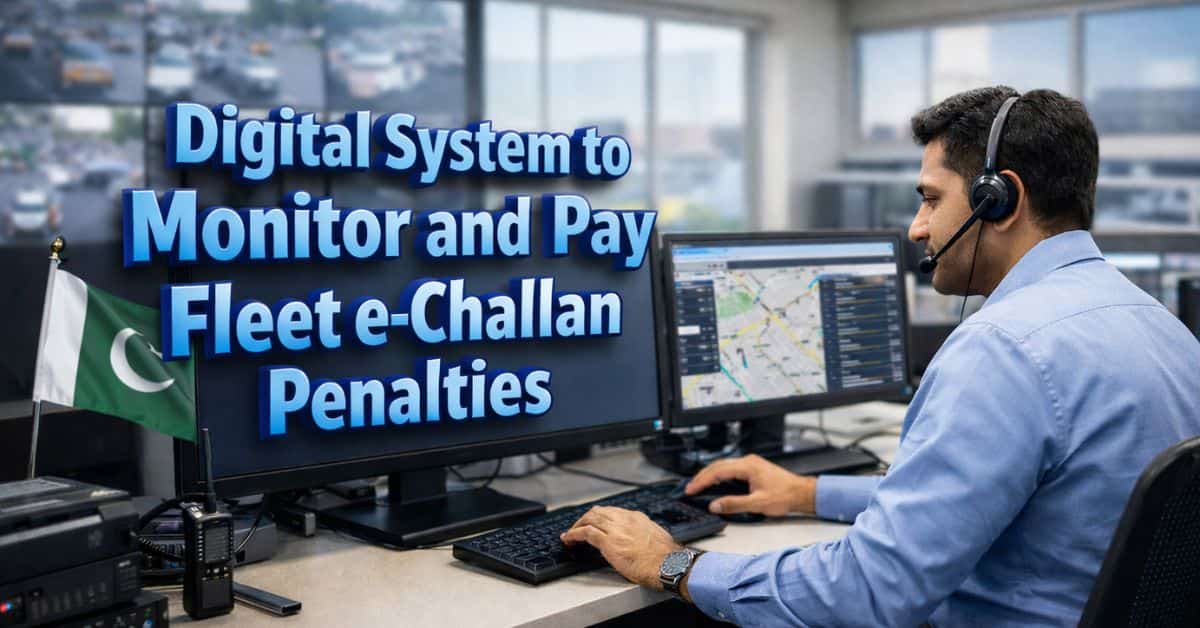
Why Employers Need a Digital System to Monitor and Pay Fleet e-Challan Penalties?
Manually verifying an e-challan is feasible for individual drivers. Nevertheless, manual monitoring is both inefficient and hazardous for employers who manage a fleet of 10, 50, or even 500 vehicles.
Key Challenges for Fleet Employers:
- Numerous vehicles are registered under the company’s name.
- Drivers undergo frequent changes.
- Absence of centralized monitoring
- Challan notifications that are delayed
- Difficulty in monitoring the history of fine payments
If a company vehicle accumulates unpaid fines, it may result in:
- Heavy cumulative penalties
- Registration transfer issues
- Legal notices
- Vehicle seizure
That is why it is imperative for operational efficiency that employers implement digital solutions to monitor and pay fleet e-challan fines in Pakistan.
Official Online Portals for Checking e-Challan in Pakistan:
Employers may corroborate fines by accessing provincial online portals. The following are the primary digital platforms that are utilized in Pakistan:
1. Punjab Safe Cities Authority (PSCA)
PSCA manages Lahore’s Safe City Project. Employers can:
- Enter vehicle number
- Check pending fines
- View violation details
- Download challan copy
- Pay through online banking options
This is highly useful for companies operating in Lahore.
2. Islamabad Traffic Police e-Challan System
An automated e-ticketing system that is incorporated with cameras is implemented in Islamabad. Fleet managers have the ability to:
- Search by vehicle number
- Check violation history
- Pay digitally
- Track cleared fines
3. Sindh Police Online e-Challan Portal
For companies operating in Karachi and Sindh, this portal allows:
- CNIC or vehicle-based search
- Fine details review
- Online payment options
Digital Fleet Management Software Integration:
Companies may implement Fleet Management Software (FMS) that is incorporated with traffic fine monitoring in lieu of manually inspecting each vehicle.
Features of Advanced Fleet Monitoring Systems:
- Vehicle monitoring that is automated
- Driver behavior analysis
- Alerts regarding violations of the speed limit
- Challan document storage
- Reminders regarding payments
- Dashboard that is centrally located
Companies can automate violation monitoring by integrating number plate data with e-challan APIs (where available).
This diminishes:
- Administrative workload
- Human error
- Financial losses
Automation Tools for Monitoring Fleet e-Challan Fines:
Modern digital solutions allow automation through:
1. Automated Reminder Systems
Internal reminder systems can be built by companies to:
- Examine the e-challan portals on a weekly basis.
- Distribute email notifications to compliance teams.
- Notify drivers immediately.
2. API Integration (Where Available)
Some provinces are progressively transitioning to API-based integrations. Large logistics organizations may integrate:
- Database for vehicle registrations
- Monitoring of traffic violations
- Systems for verifying payments
This ensures real-time monitoring.
3. ERP System Integration
Businesses using ERP systems can integrate:
- Asset management for vehicles
- Tracking expenses with penalties
- Driver accountability documents
This improves internal compliance reporting.
Digital Payment Methods for Fleet e-Challan Fines in Pakistan:
Employers may implement numerous digital payment alternatives:
- Online banking
- Mobile banking apps
- ATM transfers
- JazzCash & Easypaisa (where supported)
- Credit/Debit cards
Centralized digital payment ensures:
- Transparent accounting
- Automated receipts
- Expense categorization
- Audit-friendly records
Companies should always keep:
- Screenshots of payments
- Official receipts
- Challan clearance confirmation
Benefits of Using Digital Solutions for Fleet e-Challan Monitoring:
- Real-Time Monitoring
- Immediate access to violation records and pending fines.
- Alerts prevent accumulation of unpaid penalties.
- Operational Efficiency
- Centralized dashboards reduce manual tracking.
- Automated reminders and integrations save time for compliance teams.
- Reduced Financial Risk
- Timely payments avoid heavy penalties, interest, and legal action.
- Accurate accounting prevents duplicate or missed fines.
- Enhanced Transparency
- Digital payment records and receipts are stored systematically.
- Clear audit trails simplify reporting and compliance verification.
- Driver Accountability & Behavior Tracking
- FMS integration allows monitoring of driver behavior and violation patterns.
- Supports enforcement of company penalty policies.
- Integration with Existing Systems
- ERP or fleet management software can consolidate vehicle, driver, and finance data.
- API connections enable real-time updates from e-challan portals (where available).
- Scalability
- Suitable for fleets of all sizes, from small delivery operations to large logistics companies.
- Can handle increasing vehicle numbers without adding administrative burden.
- Compliance and Legal Safeguards
- Ensures regulatory compliance across provinces.
- Reduces risk of vehicle seizure, registration blocks, or legal notices.
Best Practices for Employers Managing Fleet e-Challans:
To build an effective system, employers should:
1. Assign a Compliance Officer
A responsible individual should be designated to supervise challans on a weekly basis.
2. Maintain a Vehicle Master List
Keep updated records including:
- Vehicle registration number
- Driver assigned
- Route area
- City of operation
3. Monthly Fine Audit
Conduct a monthly review of:
- Total fines assessed
- Fines that have been paid and those that have not been paid
- Responsibility of the driver
4. Driver Awareness Programs
Educate drivers about:
- Traffic regulations
- Areas that are monitored by cameras
- Penalty policy of the organization
5. Implement Penalty Policy
Driver negligence may result in fines being deducted from drivers by companies in accordance with the terms of the contract.
Challenges in Digital Fleet e-Challan Monitoring in Pakistan:
Despite improvements, some issues remain:
- Absence of a unified national portal
- API access that is restricted
- Challan updates that are delayed
- Payment confirmation that is inconsistent
Employers who operate in multiple provinces must monitor each portal independently.
Nevertheless, digital transformation is advancing at a steady pace.
Future of Digital Traffic Monitoring in Pakistan:
Pakistan is expanding its Safe City initiatives in main cities. Increasingly, the utilization of:
- Artificial intelligence-based surveillance
- Number plate recognition that is automated
- Vehicle databases that are centralized
Fleet monitoring will become increasingly data-driven.
Employers may capitalize on the following in the future:
- National e-challan database that has been unified
- Companies receive SMS alerts in real time.
- ERP integration that is direct
- Driver risk assessment utilizing artificial intelligence
The implementation of digital transformation will result in a decrease in traffic violations and an increase in corporate accountability.
Conclusion:
Manually managing fleet e-challan penalties is no longer feasible in the current regulatory landscape. Employers must implement digital solutions to monitor and pay fleet e-challan fines in Pakistan in order to minimize financial risk, enhance operational efficiency, and ensure compliance.
Frequently Asked Questions:
What is an e-Challan in Pakistan?
An e-challan is a digital traffic ticket issued for violations detected through automated systems like CCTV cameras, ANPR (number plate recognition), and Safe City initiatives. It replaces manual fines and allows online verification and payment.
Which cities in Pakistan have digital traffic monitoring systems?
Major cities include Lahore, Islamabad, Rawalpindi, and Karachi, with Safe City projects and automated traffic enforcement in place. Other cities are gradually adopting similar systems.
Can fleet management software automate e-challan monitoring?
Yes. Advanced Fleet Management Software (FMS) can track violations, send alerts, store challan documents, and integrate with APIs or ERP systems to automate monitoring and payment.