Two-wheeler safety has been a top priority for Punjabi officials. The government and traffic police have modified helmet legislation and enforcement procedures in response to increased traffic and the number of motorcyclists on the road.
Many riders are curious as to whether the 2026 regulations require female riders and passengers in Punjab to wear helmets.Are there exceptions for women? What consequences result from a rider or pillion passenger being found not wearing a helmet?
This post provides useful information on enforcement and sanctions, as well as an explanation of the current legal status and how the regulation affects all riders, including female riders.
Helmet Rules Under Punjab Traffic Law?
Anyone operating a two-wheeled motor vehicle, both the rider and the pillion passenger, is required to wear a helmet under the Motor Vehicles Ordinance 1965, which is applicable in Punjab. According to the specific legislative provision, a person must wear a crash-protective helmet when driving or riding on the back seat of a motorcycle.
As part of the province’s continuous road safety changes, Punjab’s traffic code has recently been updated to strengthen this requirement and stiffen penalties for infractions.
Does the Helmet Requirement Apply to Female Riders?
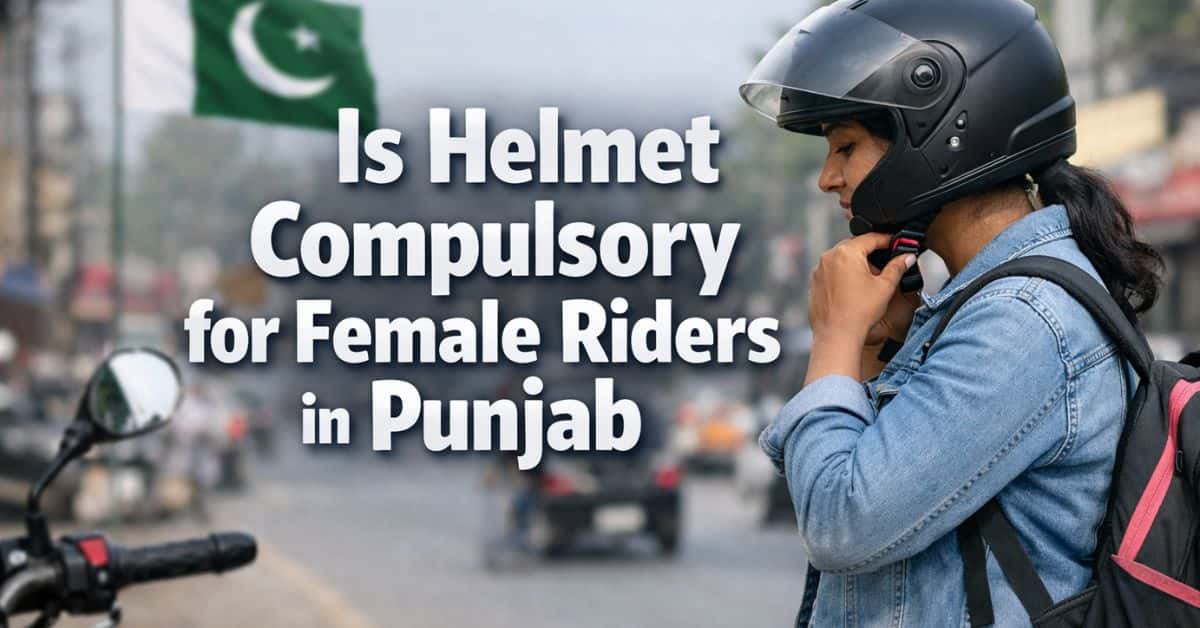
Indeed. Men, women, and children are all equally covered by the helmet requirement (with some exclusions based on age under other traffic safety regulations). The present traffic laws in Punjab do not specifically exempt female riders or pillion passengers.
Both the driver and the passenger sitting behind them need to wear helmets, authorities and traffic police units have stressed.
The rule’s language in the law itself applies to everyone riding a two-wheeled vehicle, and the reasoning for it is road safety rather than gender discrimination.
Check Also: Link Vehicle Registration with CNIC Online in Punjab
Helmet Enforcement Across Punjab:
Punjab’s main cities and districts actively enforce the helmet requirement, including:
- Lahore
- Rawalpindi
- Faisalabad
- Multan
- Gujranwala
Safe City video systems and traffic police checkpoints keep an eye on compliance, and e-challans are used to document infractions.
Helmet checks can take place anywhere, from major crossroads to residential neighborhoods, proving that enforcement is not just restricted to lengthy highway journeys or “serious roads.”
Penalties for Not Wearing a Helmet:
If a rider or pillion passenger is caught without a helmet:
- The traffic e-challan system is used to issue a challan, or fee.
- In Punjab, riding without a helmet often carries a fine of about Rs. 2,000.
- Penalties may also be imposed for helmets that are of poor quality or that do not adhere to safety regulations.
Repeated noncompliance may result in more enforcement actions, such as increased fines, the motorcycle being seized, or other legal repercussions.
Why Helmet Rules Are Strict:
In an effort to lower the number of motorcycle-related traffic accidents and fatalities, Punjab has been strengthening its traffic safety regulations. Strict penalties are meant to promote helmet use, which dramatically reduces the risk of serious brain injuries in incidents.
The revised guidelines clearly state that everyone riding a two-wheeler, regardless of gender, must wear safety gear.
Exhibition and Exceptions:
- Female cyclists are not expressly exempt from the law.
- Different restrictions may apply to children under a certain age (very small children are often subject to various criteria).
- Depending on official announcements, members of certain religious communities (such Sikhs who wear turbans) may be granted brief exemptions; however, they are uncommon and subject to legal clarification.
Policies can change over time, so always check the most recent official announcements for any exclusions.
Practical Tips for Complying With the Helmet Law:
To avoid challans and stay safe:
- Put on a certified helmet that satisfies safety requirements.
- Before riding, make sure the straps and fittings are tight.
- Verify if any pillion passengers are wearing helmets as well.
- Maintain the helmet’s cleanliness and condition.
- Steer clear of inexpensive, plastic-based helmets that might not pass safety inspections.
Safe riding protects lives and reduces legal trouble.
What to Do if You Receive a Challan for Helmet Violation?
If you receive a challan for not wearing a helmet:
- Check the information available to make sure the infraction was appropriately reported.
- Use authorized banks or official web portals to make the timely payment of the fine.
- If you think the fine was improperly imposed, you can challenge it by going through the legal appeals process.
Common Misunderstandings:
- It’s untrue that helmet regulations only apply in large cities. Punjab has enforcement.
- Women are exempt: The existing legislation contains no particular exemptions based on gender.
- Helmets are necessary regardless of distance, but short rides are safe without them.
Conclusion:
Helmet use is mandatory across Punjab for all motorcycle riders and pillion passengers, including women, under the Motor Vehicles Ordinance 1965. There are no gender-based exemptions, and violations can result in fines, e-challans, and stricter enforcement actions. Wearing a certified helmet ensures legal compliance, avoids penalties, and most importantly, protects lives on the road.
Frequently Asked Questions:
Is wearing a helmet mandatory for female riders in Punjab?
Yes. Under the Motor Vehicles Ordinance 1965, helmet use is compulsory for all riders and pillion passengers in Punjab, including women.
Are there any exemptions for women from the helmet rule?
No general exemption exists for female riders or passengers. The law applies equally to everyone, regardless of gender.
What is the fine for not wearing a helmet in Punjab?
Riders or passengers caught without a helmet typically face a fine of around Rs. 2,000, issued through the e-challan system.