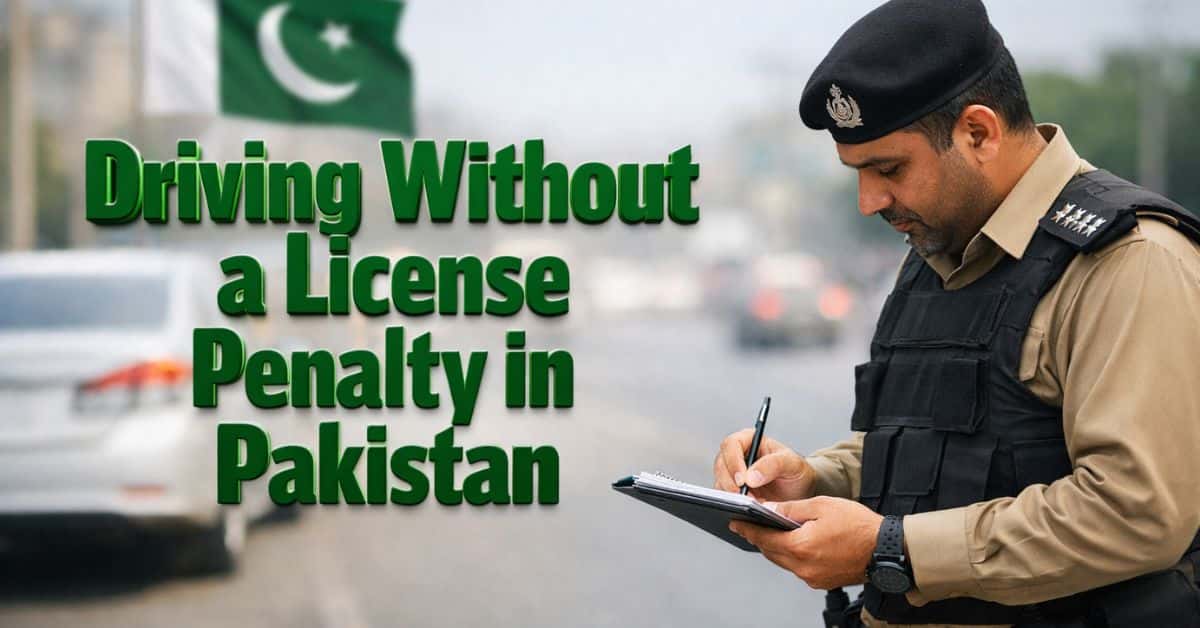
Traffic Regulations Revised Across Pakistan. Substantial modifications have been implemented as federal and provincial authorities work to enhance road safety, decrease accidents, and promote greater traffic discipline. With the proliferation of AI-driven enforcement, electronic challan systems, and more stringent penalties, drivers must remain informed to prevent fines, license suspensions, or vehicle impoundment.
This comprehensive driver guide details all significant traffic regulation updates in Pakistan, including speed limits, helmet and seatbelt laws, e-challan enforcement, commercial vehicle regulations, and province-specific amendments that every driver is required to be aware of.
Why Traffic Rules Updated in Pakistan?
Pakistan continues to experience an increase in road accidents, especially in major urban centers such as Lahore, Karachi, Islamabad, Rawalpindi, Faisalabad, and Peshawar. According to traffic authorities, the majority of incidents are attributed to overspeeding, lane violations, non-compliance with helmet regulations, and distracted driving.
To resolve these concerns, the government implemented revised traffic regulations 2026, emphasizing:
- Technology-Driven Enforcement
- Standardized penalties throughout jurisdictions
- Enhanced safety for pedestrians and motorcyclists
- Responsibility through digital documentation
Key Traffic Rule Changes Across Pakistan:
1. Revised Speed Limits and Strict Overspeeding Penalties
Speed limits have been revised and rigorously enforced through the deployment of speed cameras and ANPR systems.
Revised speed limits consist of:
- Urban roads: 50–60 km/h
- Major city arteries: 60–80 km/h
- Motorways: 100–120 km/h
- Highways (depending on vehicle type): 80–110 km/h
Overspeeding penalties now include:
- Increased penalties compared
- Multiple violations resulting in a deduction of license points
- Repeated violations resulting in license suspension
2. Helmet Rules Updated for Motorcyclists
Motorcyclists continue to be the most at-risk group among road users, prompting authorities to strengthen helmet legislation in 2026.
The updated helmet regulations comprise:
- Wearing a certified helmet is mandatory for both rider and passenger.
- The chin strap must be securely affixed.
- Children without protection are prohibited from being transported as passengers.
- Non-compliance with standard helmet regulations is now regarded as a violation.
In Punjab and Sindh, AI-powered cameras are now capable of autonomously detecting helmet violations, issuing electronic challans without the need for manual intervention.
3. Seat Belt Enforcement Expanded
Seat belt regulations are now enforced more rigorously for both front and rear occupants.
Key updates comprise:
- Failure to comply with rear seat belt regulations now incurs a fine
- Commercial vehicles observed through roadside surveillance cameras
- Drivers in ride-hailing services responsible for ensuring passenger compliance
Authorities underscore that the use of seat belts decreases fatal injuries by more than 40%, thereby establishing enforcement as a national priority.
Check Also: Punjab Govt Temporarily Suspends Helmet Fines Under a Condition
AI and Camera-Based Traffic Enforcement:
Expansion of AI Traffic Cameras
Pakistan has deployed additional AI-enabled traffic cameras in key urban areas.
These systems are now capable of detecting:
- Helmet violations
- Seat belt violations
- Red-light jumping
- Lane discipline violations
- Illegal number plates
- Mobile phone usage while driving
Upon detection, the system promptly generates an e-challan associated with the vehicle registration.
ANPR Cameras and Number Plate Rules
Automatic Number Plate Recognition (ANPR) cameras now require:
- Standardized number plates
- Clear visibility (no fancy fonts or stickers)
- Proper province coding
Vehicles bearing non-standard plates may be subject to flagging, fines, or blacklisting until the issue is rectified.
Updated E-Challan System Rules:
The e-challan system has been strengthened nationwide.
New updates include:
- Expedited issuance of challans
- SMS notifications to enrolled mobile numbers
- Electronic payment via banking institutions, mobile applications, and PSID
- Enhanced penalties for outstanding challans
Unpaid challans can now lead to:
- Vehicle blacklist
- Registration transfer blockage
- Driving license renewal suspension
New Rules for Commercial and Public Transport Vehicles:
Commercial vehicles face tighter scrutiny in 2026.
Key changes include:
- Compulsory Fitness Certification
- Enforcement of speed controls
- Driver shift restrictions to mitigate fatigue
- Digital pathway authorizations
Public transport operators violating rules may face:
- Heavy fines
- Route permit cancellation
- Vehicle seizure
Pedestrian and Zebra Crossing Laws Strengthened:
Attention to pedestrian safety has been recently heightened.
New enforcement measures encompass:
- Mandatory pedestrian stopping at zebra crossings
- Penalties for vehicles obstructing crossings
- Designated zones for pedestrian monitoring cameras
Urban authorities seek to decrease pedestrian fatalities, particularly in the vicinity of schools and hospitals.
Province-Wise Traffic Rule Highlights:
Punjab
- Enhanced Safe City surveillance camera coverage
- Implementation of helmet enforcement via artificial intelligence
- Enforcement of strict lane discipline on primary arteries
Sindh
- Karachi E-Challan Integration
- Enforcement Action Against Unauthorized Parking
- Routine health assessments for public transportation personnel
Islamabad
- Strict enforcement against lane violations
- Speed regulation on expressways
- Expansion of digital traffic monitoring
Khyber Pakhtunkhwa & Balochistan
- Phased implementation of camera enforcement
- Prioritize highway protection
- Inspections of commercial vehicles
Driving License Rules Updated:
Driving certificates are now electronically connected to traffic violation records.
The recent modifications comprise:
- Point-based disciplinary system
- Automatically identified repeat offenders
- Online verification incorporated with the National Database and Registration Authority (NADRA)
Drivers with multiple violations may face temporary or permanent license suspension.
How Drivers Can Stay Safe and Compliant?
To avoid fines and penalties, drivers should:
- Adhere to posted speed restrictions
- Wear approved headgear and seat belts
- Maintain the accuracy of vehicle documentation
- Utilize standard vehicle registration plates
- Make timely payments of e-challans
- Refrain from using mobile phones while operating a vehicle.
Responsible driving not only prevents penalties but also saves lives.
Impact of Updated Traffic Rules on Drivers:
While some drivers view stricter rules as inconvenient, authorities argue that these changes will:
- Minimize the occurrence of traffic accidents
- Enhance the efficiency of traffic movement
- Promote ethical driving behavior
- Preserve thousands of lives each year
Countries with robust enforcement mechanisms have demonstrated substantial enhancements in road safety—Pakistan aspires to adopt a similar approach.
Conclusion:
The Traffic Rules Updated Across Pakistan represent a significant advancement toward safer, more intelligent, and more responsible road utilization. With the implementation of AI enforcement, increased penalties, and digital surveillance, ignorance of traffic regulations is no longer a valid justification. Drivers who adjust to these adjustments will not only evade penalties but also promote a safer driving environment throughout Pakistan. Remaining informed and compliant is now imperative for all motorists.
Frequently Asked Questions:
When do the updated traffic rules come into effect across Pakistan?
The revised traffic regulations are being enforced in phases starting 2026, with major cities already operating under AI-based and e-challan systems. Full enforcement varies slightly by province but compliance is expected nationwide.
Is a helmet mandatory for motorcycle passengers as well?
Yes. Both rider and passenger must wear a certified helmet with a fastened chin strap. Carrying an unprotected passenger, including children, is a punishable offense.
Can AI cameras issue challans without a traffic officer?
Yes. AI-enabled and ANPR cameras can now automatically detect violations such as overspeeding, helmet non-compliance, seat belt violations, red-light jumping, and mobile phone usage. Challans are issued digitally without manual intervention.